Wednesday, July 27, 2011

Done with Psych, but Not...

Last week was the end of my first clinical rotation.  I parted ways with my patient the Friday before that, which was actually quite sad.  He said that he would miss me.  I didn't know what to say.  Hopefully he continues to get the help that he needs and can eventually become well enough to leave the hospital.

This week, I began my Ob/Gyn rotation at Jacobi Medical Center, our next-door city-owned teaching affiliate.  I happen to be starting off on the Labor and Delivery floor for the first ~1.5 weeks.  Today, my first day up on the floor, I witnessed 4 births: two natural, and a pair of twins by C-section.  Theoretically the C-section was interesting and cool to see (my first time ever in an operating room!), but really it just made me resolute that, given the choice, I would never want to go through that.  The mother couldn't really see what was going on, and thank goodness.  Surgery is, by its nature, a violent act (cutting open tissues that, in this case at least, are perfectly healthy), but on top of that, the surgeons aren't exactly what I would call gentle.  I'll leave it at that.

Obviously this is a lot different from my psychiatry rotation.  That doesn't mean, however, that I'm entirely done with psych.  Today, I saw a patient who believed she was 42 weeks pregnant and scheduled to be induced this evening.  She believed.  Well, she wasn't pregnant, not even a little bit.  She probably has pseudocyesis, a condition in which patients believe and even experience symptoms of pregnancy without actually being pregnant.  I felt well prepared to talk to her and her family, who were obviously all going through some very intense emotions when they found out that she actually wasn't pregnant and about to deliver a baby.  It was really rewarding that the doctor and nurses allowed me to essentially take on the patient for myself.  Mostly, they didn't especially feel like dealing with someone who wasn't actually supposed to be there (no baby = no reason to be on Labor and Delivery floor), but one of the nurses later told me that I did a good job.  That was rewarding.  I had a feeling psych would come in handy after the rotation was over...

Monday, July 11, 2011

A Pulse

My patient had been refusing his medications for several weeks.  His schizophrenic delusions became more vivid by the day.  Upon receiving a court order to medicate him against his will, the staff found it necessary to restrain him forcefully to give him the haldol injection he needed.  I was not there, but I spoke with him the day after, and a few days later, and a few days later…

He became withdrawn.  Before the treatment, he had been talkative, indulging me with details about his family, his education, and most importantly, his delusions.  Now he stared more into the distance, choosing not to look me in the eyes.  When he spoke, it was only to give direct answers to my questions; he no longer volunteered information.  His body had begun to shake.  It was most likely a side effect from the medication, but when I saw how it worsened when he spoke about his most pressing concerns, I realized that it could also have been from anxiety.  He was suffering.

A week after the treatment, I spent nearly 90 minutes with him.  The only substance of our conversation was his desire to go to “the hospital,” since he did not believe that he was currently in one.  He was concerned about the shaking but also about his heart.  For the past few weeks, he had become convinced that his heart was not working; he thought that it sometimes stopped.  I asked him if he had ever tried taking his pulse.  He awoke from his trance, looked me in the eyes, and said that he did not know how.  He quickly took me up on my offer to teach him, his eyes widening with wonder when he felt the beating of the radial artery under his fingertips.  I told him that he could try to check it when he felt that his heart was not working.

He withdrew again, telling me that the pulse was not connected to the heart, unconvinced of my explanations of how the circulatory system works.  I gave him the option, several times, to leave if he no longer felt like talking, but he always chose to stay.  Even though I felt as if I was doing nothing for him, I could tell that simply being there together was somehow comforting.  I am the only person he talks to; he doesn’t talk to the other patients, the nurses, the social workers, or anyone.  Just me.  I think of that moment when he felt his pulse for the first time ever, and I hope that I am helping him – and I choose not to think of what will happen to him when I leave for good.  I don’t want to imagine the pain.

Tuesday, July 5, 2011

This Is Where I Work

Halfway through my psychiatry rotation at the Bronx Psychiatric Center, I've gotten a better sense of what kind of a place it is.  In a sentence, it's the end of the road for psychiatric patients who have failed treatment, run out of insurance, or had criminal pasts.  The patients are kept in wards behind double-locked doors.  We all have panic buttons.  We have to swipe our ID's to get both in and out of the building.  My impression of it two years ago, in first-year ICM, was that it was a depressing place; how could anyone work with patients who had so little hope of getting better?  At least, so little hope of getting well enough to leave?

First impressions go a long way.  Halfway through my rotation, however, I've realized that there is so much more to be said for this place.  Up on Ward 12, the patients are prepared for living in society again after months or years of treatment.  They take classes, go to off-site programs, learn how to care for themselves.  They have community meetings, where they all gather and voice their opinions and concerns about life on the ward in an open forum.  These are people who have committed heinous crimes in the past - molesters, murderers, drug dealers, anything you can imagine - but it truly feels like a community, and the patients are people you would want to chat with in a grocery line.  Their lives have been turned around by proper recognition of their mental illnesses and appropriate (and oftentimes heavy) treatment of their diseases.

Ward 7, however, is slightly different.  An all-male admissions ward that houses patients with acute exacerbations of long-standing disease, it's where I've been assigned to work for these six weeks.  These patients have similar stories as the ones on Ward 12, but they're not well controlled by treatment.  Several times a week, there are incidents involving emergency medications for acute psychosis, injuries to one another, attempts to escape, and defiant behavior (e.g. moving furniture around at night with disregard to roommates).  My patient has been - and still is - refusing to take his medication, insisting that he does not have psychiatric illness.  His hallucinations and delusions are complex and concrete, like the fact that he has billions of dollars, that Mayor Bloomberg is trying to kill him, and that Magic Johnson manages his bank accounts.  This is a smart man who has completed high levels of education, but his illness has taken over his ability to function in society.  We learned about schizophrenia during second year, but I never imagined that it would be so recognizable and real.

Halfway through my psychiatry rotation, I'm beginning to understand the devastating reality of mental illness.

Bronx Psychiatric Center

Saturday, June 18, 2011

A Road Trip Recounted

...all in pictures, because I've been too busy to take the time to do this properly.  And here goes our southern whirlwind:

 In Washington, D.C., my friends were surprisingly accommodating of my ridiculous insistence on seeing all things aerospace-related.

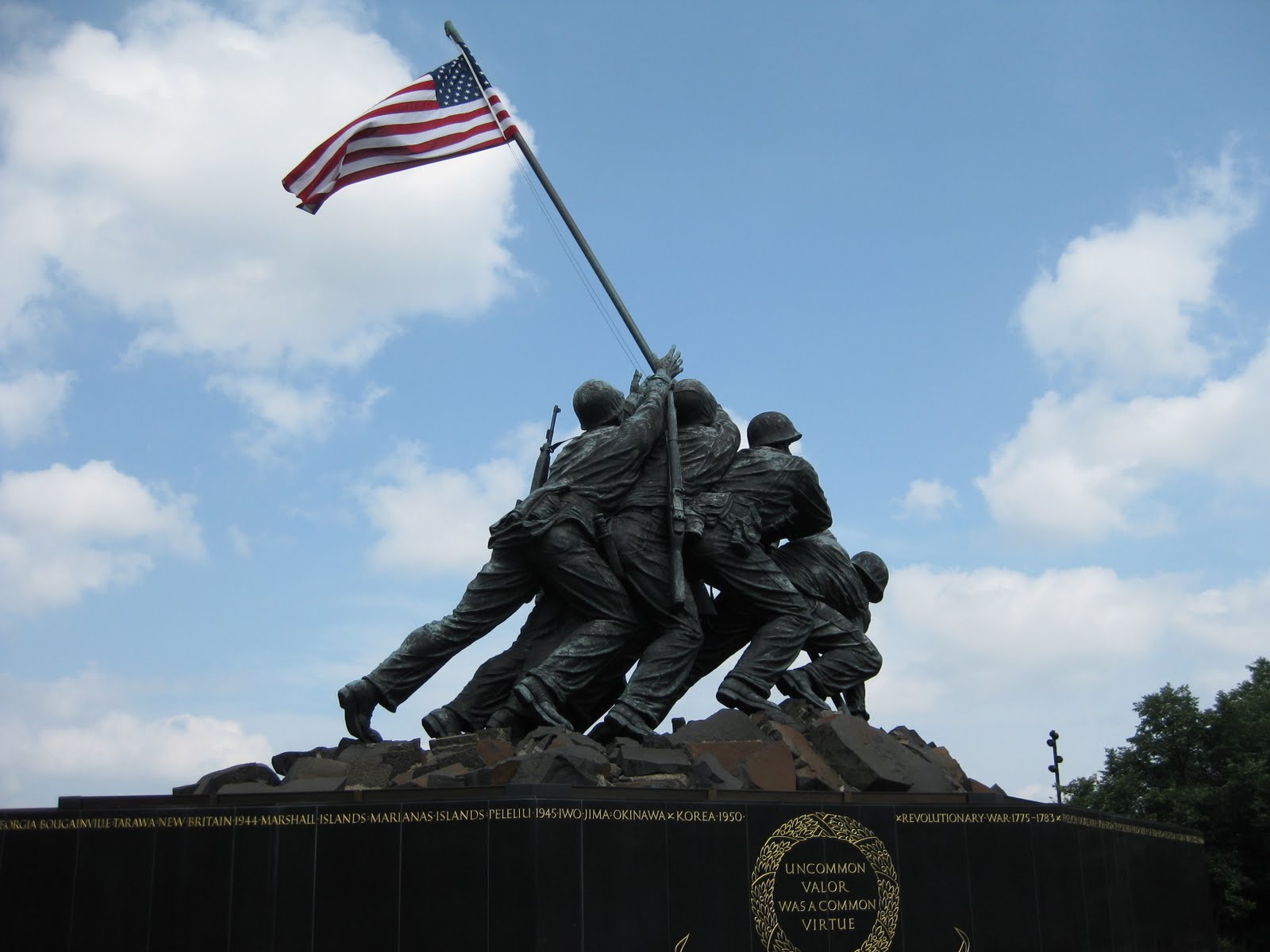
We had a chance to stop by my favorite monument in D.C. 

At Gravelly Point Park, you can watch (and feel!) the planes land at Reagan from very close range. 

On our drive through Tennessee, we stopped briefly at Great Smoky Mountains National Park. 

In Nashville, we witnessed the end of the Great Cicada Invasion of 2011. 

 Nashville also provided us with great entertainment.  Here is the end of the Music City Roots, a weekly live radio show held at the Loveless Cafe barn.

In Memphis, we attended one of the Top 10 Rooftop Parties in the country at the Peabody Hotel. 

In Louisiana, outside of Baton Rouge, we were able to see the beauty of the Rosedown Plantation. 

Later, we joined in a crawfish boil at the house of the brother of a friend of the roommate of the former babysitter of Thomas (one of our road trip companions).  Talk about southern hospitality! 

In New Orleans, there was a band on practically every corner. 

We were also invited to participate in a second line, the parade held to celebrate the life of someone who's died. 

The culmination of our New Orleans experience was Bourbon Street, busy even on a Sunday night. 

In Savannah, we ate every southern dish you can name (and a few more) at this former boarding house. 

We were able to soak in some sun and play in the bathwater-warm Atlantic at Folly Beach, outside of Charleston. 

When we camped on Ocracoke Island (part of the outer banks islands of North Carolina), we were just on the other side of the dunes from the ocean. 

On our way back home, we stopped briefly at Kitty Hawk, where the first powered flights took place.  The first flight took off from this large rock and came back down at the small rock in the distance.

It was a delightful trip, a great break before beginning our real lives as third-year medical students.

Monday, June 13, 2011

Real Life

Over the next few days I will be trying to recap the amazing 15 days of our 3,929-mile road trip down South.  Maybe a picture or two will highlight each of the many cities (and non-cities) we saw throughout the trip.  Tonight, however, my mind is on one thing:

I am now officially a third-year medical student.  I am a clinical clerk.  I am no longer a regular student, someone who sits and listens and learns.  I am now a member of a team responsible for the care of real patients.  Tomorrow, I report for my first day at Bronx Psychiatric Center, where there will be anyone from the severely depressed to the severely psychotic.  Yes, it's nerve-wracking, but I can't wait to learn.

Saturday, May 28, 2011

Rambling

Done with the boards!  (And thank goodness for that...)  So now what do we do with our lives, now that we're not studying all day long?

ROAD TRIP!  Watch out, South...

...here we come!

Wednesday, May 25, 2011

On Days Like This

I can't believe I'm stuck indoors.  One thing's for sure, though...

...in two days, I will be FREE!

Thursday, May 19, 2011

Watching the Weather

The bulk of my excitement over the past few weeks of studying has been watching the weather.  I sit in a room on the eighth floor of Belfer, occasionally glancing up from my books and finding that the clouds have moved.

Clear day

 Cloudy day

 Hazy day

Rainy day

Wednesday, May 4, 2011

In the Merry, Merry Month of...What?

As I walked through Madison Square Park on Monday, I was greeted by the sight of tulips.

Beautiful tulips

Tulips of every color (with matching park-goers)

But then, I saw one of those sights that requires a double-take.  Was this an illusion?  Was my brain messing with me?  As it turns out, no.  There was, in fact, a giant statue of a distorted head in the middle of the park.  This was not an illusion.

See background Empire State Building for conformation of photographic non-distortion.

Wednesday, April 27, 2011

No Description

Exciting pictures from Easter at home!

 Springtime?

Too much time on my hands.

Monday, April 18, 2011

Sunday Project

Today, since I'm in Minnesota and am determined to take a real break before studying for boards, I decided to do a little project.  I picked this up yesterday, when we stopped at Ingebretson's in Minneapolis on the way home to Rochester.  So many delightful Scandinavian projects!  This one seemed perfect for my time at home.

 The Knitted Nisse.  According to Wikipedia (which we all know is more than sufficient for most needs), a nisse is a household spirit.  He is commonly a small, elderly looking man with immense powers to protect the farmer, his family, and his property.

What will I do with my nisse?  Maybe he will watch over me when I begin studying in earnest.

Tuesday, April 12, 2011

Skill

I think I'm living up to my word that my life will be boring for a while.  My life over the past 3 weeks has consisted, mostly, of studying.  A little sleeping.  All right, fine, a few excursions into Manhattan as well.  But mostly studying.

However, there was something pretty cool.  Exciting.  FUN.  Last week...I drew my own blood!!  And then I looked at it in the microscope and realized it's as boringly awesome as everyone else's.

Wednesday, March 30, 2011

An Overwhelming Moment...An Eternity of Peace

Today was one of the longest days I can remember having in medical school.  It was long in both hours and mental drain.  This morning, we  had four -- FOUR -- lectures, about bone tumors, radiology of rheumatology, thalassemias, and sickle cell anemia.  After a very short lunch, we had a small-group case conference on monoarticular arthritis and its various causes.  Hours-wise, I'm sure 6 hours of class doesn't sound like that much, but let me assure you: it was exhausting.

Despite that, I was having a good time.  The bone tumor lecture was fast-paced and to the point.  The radiology lecture was hilarious, because the doctor teaching it happens to be a sarcastic physician who also works as the Bronx Zoo radiologist in his spare time.  (Yes, he x-rays animals.  In his free time.)  The thalassemia lecture was potentially confusing, yes, but I was on fire and ready to give my full attention, and so it made sense to me.  Unfortunately, this wasn't true for many of my friends, who complained about the complexity and lack of teaching quality immediately afterward.  On top of that, some of them started talking about Boards, and about study strategies, and about how stressed they were, and about scores -- and I started to panic.  I couldn't be there.  I couldn't hear it.  I needed to leave.

So I did.  I left the auditorium and walked out into the courtyard.  It was surprisingly warm, and I spied some chairs in the sun, so I walked over to them and sat down.  I'm an optimistic person, a happy person, and I don't generally get too stressed when it comes to school.  I've always been that way.  Sure, I'll have moments of panic when I realize that assignments and responsibilities are building up, or if I don't feel prepared for a test, but typically my view is that I know what I know, I can do what I can do, and at a certain point, that's got to be enough.  There may be a time to stress about Boards, but for me, it is not now.  With my heart beating fast from the claustrophobia of being surrounded by stressed classmates, I sat in the chair in the sun and closed my eyes.  I knew that I needed to do something, some kind of meditation or song or anything, to calm myself down enough to go back into that auditorium.  All that could come to my mind was the following song:

Jesus, all for Jesus
All I am and have, and ever long to be.
Jesus, all for Jesus
All I am and have, and ever long to be.


All of my ambitions, hopes, and plans
I surrender these into your hands.
All of my ambitions, hopes, and plans
I surrender these into your hands.


For it's only in your will that I am free.


Jesus, all for Jesus
All I am and have, and ever long to be.


And I was calm.  And I was refreshed.  And I was ready to go back.  That peace pervades me still, as it always does.  This is why I am calm: because I know I've got nothing to fear.

Saturday, March 26, 2011

16 Down...

...2 to go.  Or something like that.  I tried counting up all of our "major" classes in medical school.  It's less exact than one might expect, since some classes have 8 units but only count as one listing in the curriculum (I'm looking at you, Molecular and Cellular Foundations of Medicine), whereas others span both first and second year but never have a test (where to put you, Bioethics?).  It makes counting a little difficult.  Regardless of the correctness of the count, the truth still remains:  I am now taking my final two classes of medical school.

That's crazy.

After April 15, every test I take will have the word "national" in it.  After April 15, I will theoretically have the knowledge to go into the hospital and synthesize all of the past two years' worth of knowledge into patient care.  After April 15, I will be -- gasp -- a third year medical student.  That's partially a lie.  Between April 15 (the end of second year) and June 13 (the beginning of third year), there lies a snarling, fire-breathing beast known as the USMLE Step 1, a.k.a. THE BOARDS.  All our lives will be consumed in never-ending studying until the appointed day of the 8-hour fight to the death.  I apologize in advance for how boring my life will be until that point.

Until then, I will be racing through my final two classes of medical school, Musculoskeletal System and Hematology.  What up, blood?

Friday, March 18, 2011

Why I Love My Decision

I was poking around on the Air Force health professions website today, and I ran across this description.  Definitely dumbed down a bit...but totally awesome.


Flight surgeons are the heart of the aerospace
medicine program. They’re responsible for the
health and effectiveness of aircrew members and
those who directly support flight operations.


Aerospace medicine addresses the physical and
mental challenges presented by modern high-
performance aircraft and the aerospace
environment. Among these are high-altitude stress,
G-forces and the physiological aspects of flight.


The best way to understand the medical conditions
pilots experience from high altitude, G-forces, and
rapid pressure changes while flying is to experience
them firsthand.


As a flight surgeon, it’s part of your job to fly.
Depending on your squadron’s aircraft, you may
experience Mach 2 in an F-15 Eagle or work aboard
a KC-135 during a midair-refueling mission.


This is why I want to go into flight medicine.  Tomorrow is my 2-year anniversary of being commissioned...and I still believe it's the best decision I've made yet.

Wednesday, March 16, 2011

Barriers

I learn so much from my patients.  I don't just learn how to conduct a medical interview, how to perform a physical exam, or how to give a case presentation.  No, I learn much more than that.

Yesterday's patient was an 80-year-old man who has been in the hospital for 6 weeks.  Medically, things have gone from bad (weakness and shortness of breath from pulmonary fibrosis complicated by heart failure) to worse (a complicated UTI with methicillin-resistant staph).  Anyone entering his room must wear a gown and gloves to avoid picking up MRSA themselves.  As I donned the protective gear, I wondered how it made him feel to know that the medical personnel feared his infection.  Lifestyle-wise, things have also gone downhill.  During his stay at the hospital, he has been informed that his home is no longer environmentally safe and that he can no longer live alone, as he has for all of his adult life.  He cannot go back to his home, which is the last place he stayed before coming to the hospital 6 weeks ago.  This was clearly upsetting to him, but he tried his best to remain stoic about the situation.  His parents and siblings died at young ages of heart attacks.  His closest relatives were a niece and nephew far out on Long Island.  He was so thin I could see all his bones.

Despite all of these hardships, he showed hardly any emotion about it all.  He clearly liked talking, as he rambled on and on after each question we asked.  He had a sense of humor.  When we asked if he ever married or had children, he said, "No, never.  I offered my hand to many ladies, but they would only give me their foot."  He looked at me and smiled.  Later, "My sister died at 60.  My brother...died at 61.  I guess I was supposed to go at 62, but thank God I'm still here."  I was somewhat surprised, but comforted, to hear this; despite his many difficulties, he was thankful to be alive.  Later, when I was conducting the physical exam, he said out of nowhere, "You're going to make a great doctor."  All I could think about was how young I must have looked to him.  I was caught off-guard.  "I hope so!" I laughed, and then, "Thank you."

By then, I had forgotten about the gown, forgotten about the gloves.  They may have been a barrier to MRSA, but they were not a barrier to connecting with my patient.

Monday, March 14, 2011

Quick Jaunt to Minnesota

During my weekend in Minnesota, my favorite quote by far was the following:  "It's only getting down to 10 degrees tonight.  We don't need coats!"  Take that, whiny New Yorkers!

Tuesday, March 1, 2011

New License Plate

I'm upset.  My car had to get a new license plate.  The good news is that I'm keeping it registered in Minnesota, so there's no need for an icky New York plate.  The bad news is that I LOVED MY OLD PLATE.  It was perfect -- kind of my initials, plus lots of my favorite number (which is, of course, 8).  Now it's just lame.

 Really lame.

I guess I should be thankful for my cool new decoration.

Monday, February 28, 2011

I Like My Patients (and my patients trust me)

Some of my classmates take exquisite pleasure in their ability to diagnose an unusual disease etiology on their Tuesday clinical rounds.  "I diagnosed Chlamydia psittici because I thought to ask about her pets."  Others can't wait to brag about the unusual (and often disturbing) medical sights they saw.  "We saw a guy with a necrotic...gangrenous...penis."

I'm a medical student.  Of course this stuff interests me.  Of course I would be excited if I was able to be the one who recognized the one clue that led you to an alternate (correct) diagnosis, of if I was able to see a really rare, gruesome, interesting disease process.  I admit that.  However, I think I'm different from many of my (more vocal) classmates.  For me, the most interesting and rewarding parts of my Tuesday physical exam hospital rounds are my interactions with the patients.

One of medicine's really big pulls, for me, is the patient interaction.  Science is great, but it's even better when it's science and a unique person with a unique personality and a unique history.  It's not just the disease process, it's how the disease affects the individual's life.  An ulcer is an ulcer, but how does the patient experience it?  Deal with it?  Require help for it?  I've always known that patient interaction was a crucial part of the doctoring process, but I was never really sure how good I'd be at it.  I don't want to make any premature judgments, and I certainly don't want to brag, but I think I've found out the answer:

I like my patients, and my patients trust me.  This has been evident multiple times over the course of our physical exam course, when my patients tend to look to me for a smile or understanding even when my partner is doing the interview or exam, but it's been especially evident over the last two weeks.  Two weeks ago, our patient was a young woman with cellulitis complicated by a deep vein thrombosis.  She was in good spirits despite being in the hospital with an immovably swollen, painful, itchy leg.  We performed a full physical exam, as always, to get practice at it.  She asked a few questions along the way, curious about what we were doing.  "We're listening for the size of your liver," I explained, or, "We're comparing the circulation in your legs."  She reminded me of myself, simply curious and interested in the process.

Last week, our patient was a middle-aged woman with every chronic disease in the book -- what we like to call a "typical Bronx patient."  Asthma, diabetes, emphysema, and some sort of upper respiratory infection that had landed her in the hospital for a few days, but she was friendly and cooperative.  In taking a thorough history, my partner asked about her social history, which included drinking habits.  "Ohhh...I drink a lot, we'll just say that."  How much, my partner wanted to know.  "We'll just leave it at that," she chuckled.

But this is a crucial part of the medical history, so I stepped in.  I knew that patients often feel uncomfortable talking about how much they drink or smoke.  I also knew that it can be hard to quantify sometimes, even if the patient isn't uncomfortable.  I tried to help out.  "How many days do you think you drink?  Almost every day?  A few days a week?"  That was all it took.

She looked at me with a smile in her eyes.  "Oh, pretty much most days, almost every day."

"What do you drink?"  Sometimes it's easier to quantify when directly asked about the type of drinks.

"I love my Coors Light.  I get me those big cans -- not the little ones, but the big 24-ounce ones."  She gestured to show me the size of the can.  "Yeah, the big ones.  I like to have 'em nice and cold."

"How many do you usually drink?" I pressed.

"Oh, maybe 3.  Sometimes 2, sometimes 4.  Depends how I'm feelin'."

Usually when you ask about lifestyle habits, like smoking or drinking, you get a vague answer.  Usually patients don't like to go into detail.  They don't lie, but they don't really want to get into the whole story.  I don't think it's because patients aren't trustworthy, or because they're unwilling to tell the truth.  I think it's because we sometimes simply don't ask the right questions.  All it took was a little understanding and creativity to get an answer that was much more full of details and trust than I needed or expected.

I like that.  I like being able to connect with my patients, knowing that I'm able to excel at the part of medicine that pulled me into it in the first place.  When we were done with the interview and exam, and we were about to leave the room, our patient asked us about our status in school.  She was wondering how far along we were, and how much longer we had.  I explained that we were in our second year, and that the first two years were mostly classroom learning whereas the third and fourth years will be spent in the hospital doing rotations, and that patients like her are our teachers.  She loved that.  She laughed and smiled, and thanked us.  Thanked us?  For poking and prodding her when she was already sick in the hospital?  Yes, thanked us.  Need more proof that we connected?  She remembered my name.  "Take it easy, Michelle!"  I did.  The rest of the day, I was elated.

Saturday, February 19, 2011

Skit Night

I know I kind of fell off the face of the planet in the past few weeks.  Sorry about that.  In the meantime, classes have gotten tougher, sleep has diminished, and we've had this little thing that we call Skit Night here at Einstein.  I can almost guarantee that every med school has its own version of Skit Night, a night where students show funny videos, dances, songs, etc. that they've created to parody our lives as medical students.  This year, I was featured in three short "commercials" between some of the longer skits.  Here they are.